
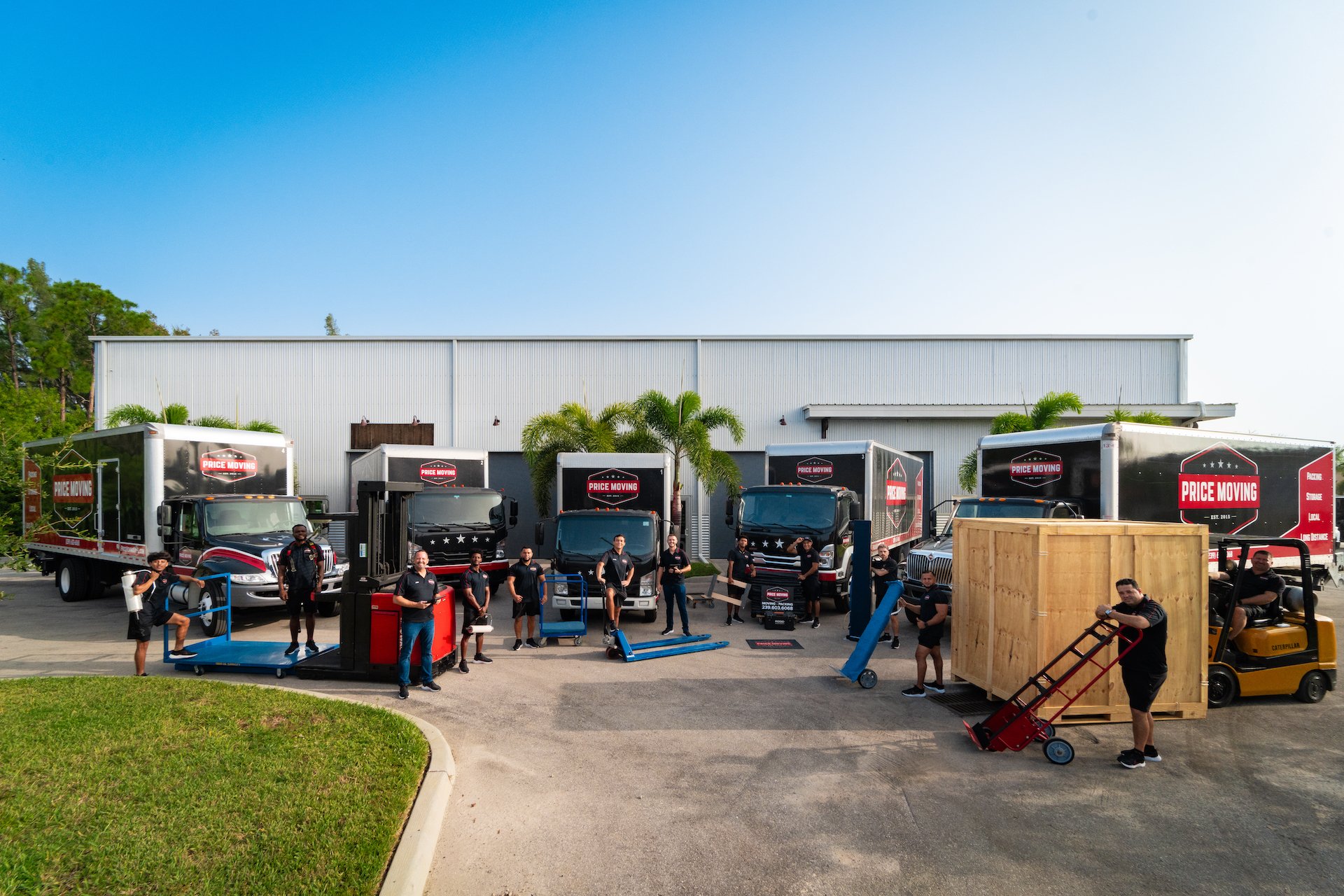
Moving in Bonita Springs involves more than packing boxes and calling a truck. Florida has specific licensing requirements for moving companies, communities in Bonita Springs have their own rules about move-in access, and the legal documents that govern your move carry real weight. Knowing what applies to your situation before moving day keeps the process running on schedule.
Florida’s Licensing Requirements for Movers
Any moving company legally operating within Florida must be registered with the Florida Department of Agriculture and Consumer Services (FDACS). This registration is required for all intrastate moves, meaning any move that begins and ends within Florida’s borders.
FDACS registration requires movers to meet minimum insurance standards, follow state pricing and billing regulations, and provide customers with a written estimate before the move begins. A company without an FDACS registration number has no legal standing in the state, and you have limited recourse if something goes wrong.
Our FDACS license number is IM3101, which is current and active. We are happy to provide this number at any point before or during your booking.
What FDACS Registration Means for Your Move
When you hire an FDACS-registered mover, you are covered by Florida’s consumer protection rules for the moving industry. These rules require a written estimate before the move, a bill of lading at the start of every job, and defined procedures for handling damage claims.
An unregistered mover operates outside these protections. If your belongings are damaged or the final bill looks nothing like the estimate, you have no state regulatory body to contact. This is one of the most straightforward reasons to verify registration before booking anyone.
Federal Licensing for Long-Distance Moves
If your move crosses state lines, your mover needs more than FDACS registration. Interstate moves require authority from the Federal Motor Carrier Safety Administration (FMCSA), the federal body that regulates movers operating between states.
Our USDOT number is 3641612 and our MC number is MC01251583. Both are active. If you are considering a move out of Bonita Springs to another state, or moving into Bonita Springs from out of state, we are licensed to handle that under the same crew and service standards as a local move. More detail is available on our long-distance moving page.
HOA and Community Rules in Bonita Springs
Many Bonita Springs residential communities are managed by homeowner associations (HOAs) with their own rules around move-in and move-out access. Common requirements include designated move-in times or windows, specific loading zones or parking areas for moving trucks, advance notice to the HOA office before the move date, and in some cases, a refundable damage deposit for common-area damage.
Communities like Bonita Bay, Spanish Wells, and Palmetto Ridge each have their own access procedures. Before your move date, contact your HOA or community management office to confirm what is required. Sharing that information with our crew in advance means no delays at the gate or front desk on moving day.
If your new home is in a gated community, arrange for the crew to have gate access before the morning of the move. Our team can coordinate with you on logistics, but the HOA clearance itself needs to come from you as the resident.
Parking and Loading Zone Access
Moving trucks require space to park close to the entrance of the home being loaded or unloaded. In residential neighborhoods, this is usually straightforward. In higher-density areas, including apartment complexes and condominiums along Bonita Springs’ Gulf Coast communities, parking and loading access may be restricted.
For apartment and condo moves, check with your building management in advance about reserved loading zones or designated parking areas for moving vehicles. Some buildings also require elevator reservations for moves. Sorting out these details before moving day prevents the crew from spending time on logistics that should have been handled beforehand.
If parking is going to require a permit or approval through the city or community, that process typically falls on the resident to arrange. Our crew will work with whatever access is available, but confirming it in advance keeps the move on schedule.
The Bill of Lading: What It Is and Why It Matters
The bill of lading is the legal contract between you and the moving company. It outlines the services being provided, the agreed-upon pricing, the pickup and delivery addresses, and the procedures for filing a damage claim. Every licensed mover is required to provide one, and you should read it before signing.
The bill of lading is not a formality. It is your primary documentation if there is a dispute about costs, damage, or services. If anything on the bill of lading does not match what was discussed or quoted, raise it before the crew begins loading.
We provide a bill of lading on every job. Damage claims, when they occur, are handled according to state and federal replacement valuation procedures as outlined in that document. Additional damage protection is available for an added charge and is recommended for high-value or specialty items.
For more information on what our residential moving service covers, or to check our frequently asked questions on licensing, insurance, and billing, visit our website. To get a free estimate, call us at 239-603-6068 or submit a request online.